RE-GE-NE-ER-AT-TI-VE
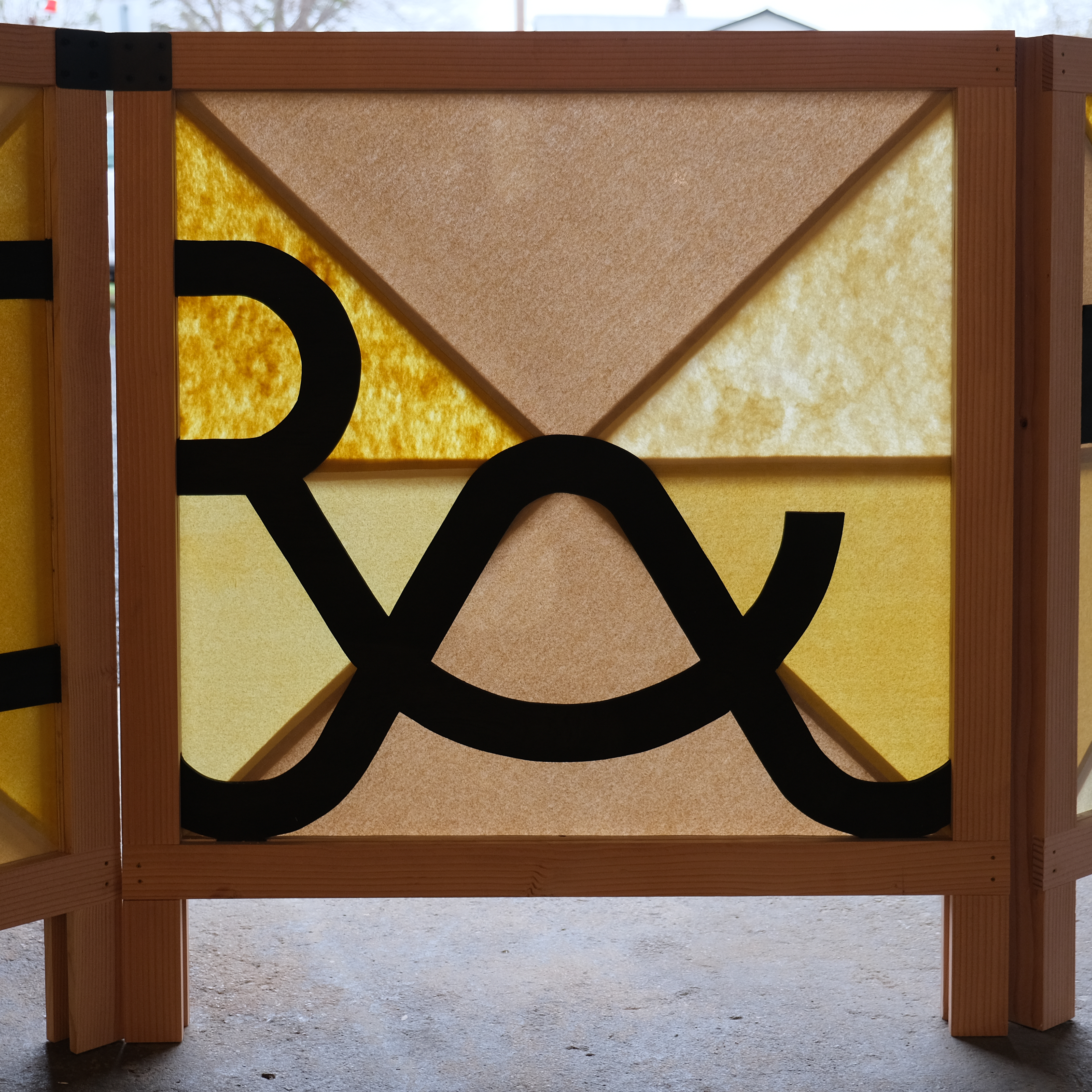
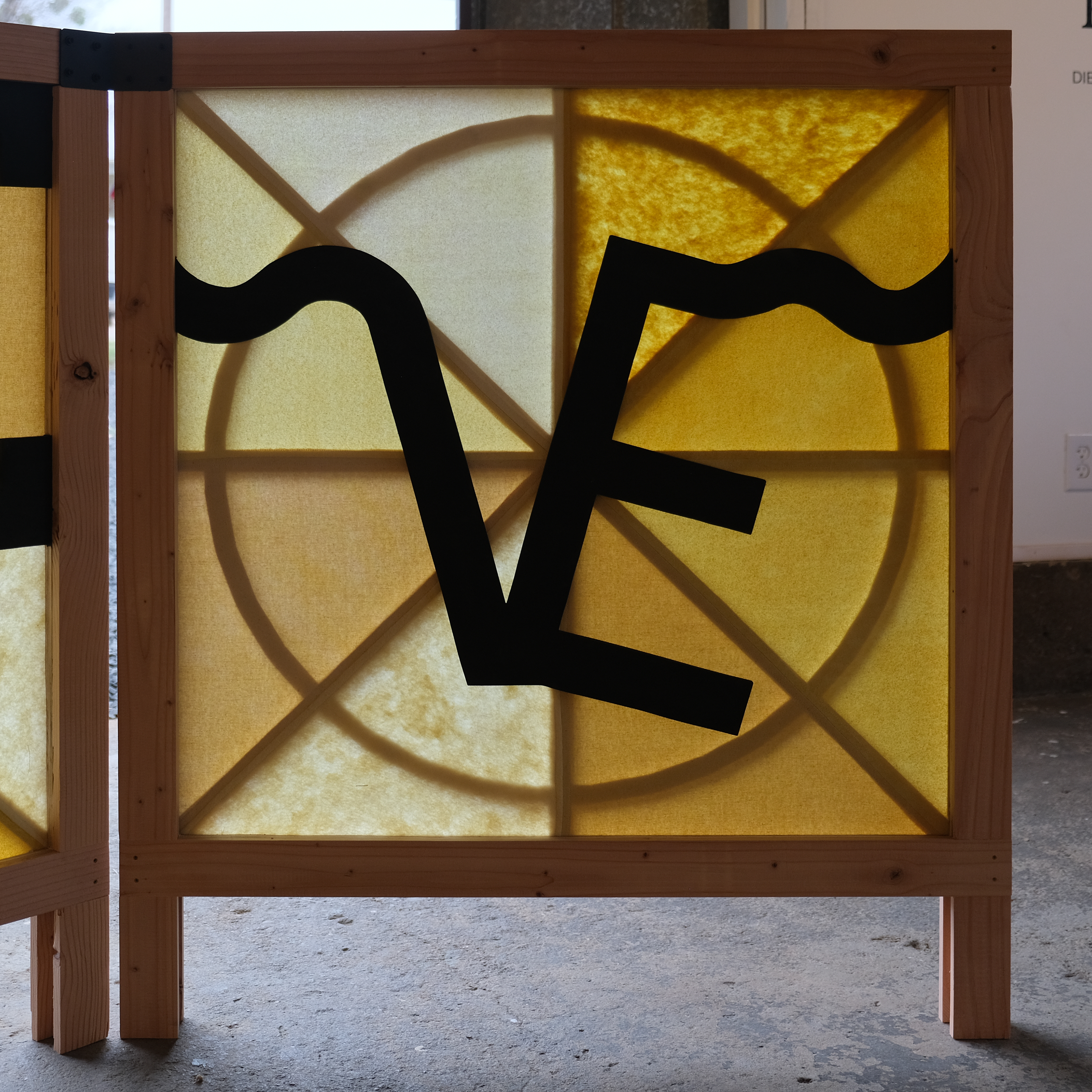
Installed as a six-panel sequence based on the geometry of historic snake-rail fencing, RE-GE-NE-RA-TI-VE links contemporary rotational grazing practices to the long history of enclosure in livestock production. Each panel displays a paired set of letters–RE, GE, NE, RA, TI, VE–rendered in the style of cattle brands (swinging RE, lazy GE), referencing the traditions of marking, ownership, and range management central to ranching culture.
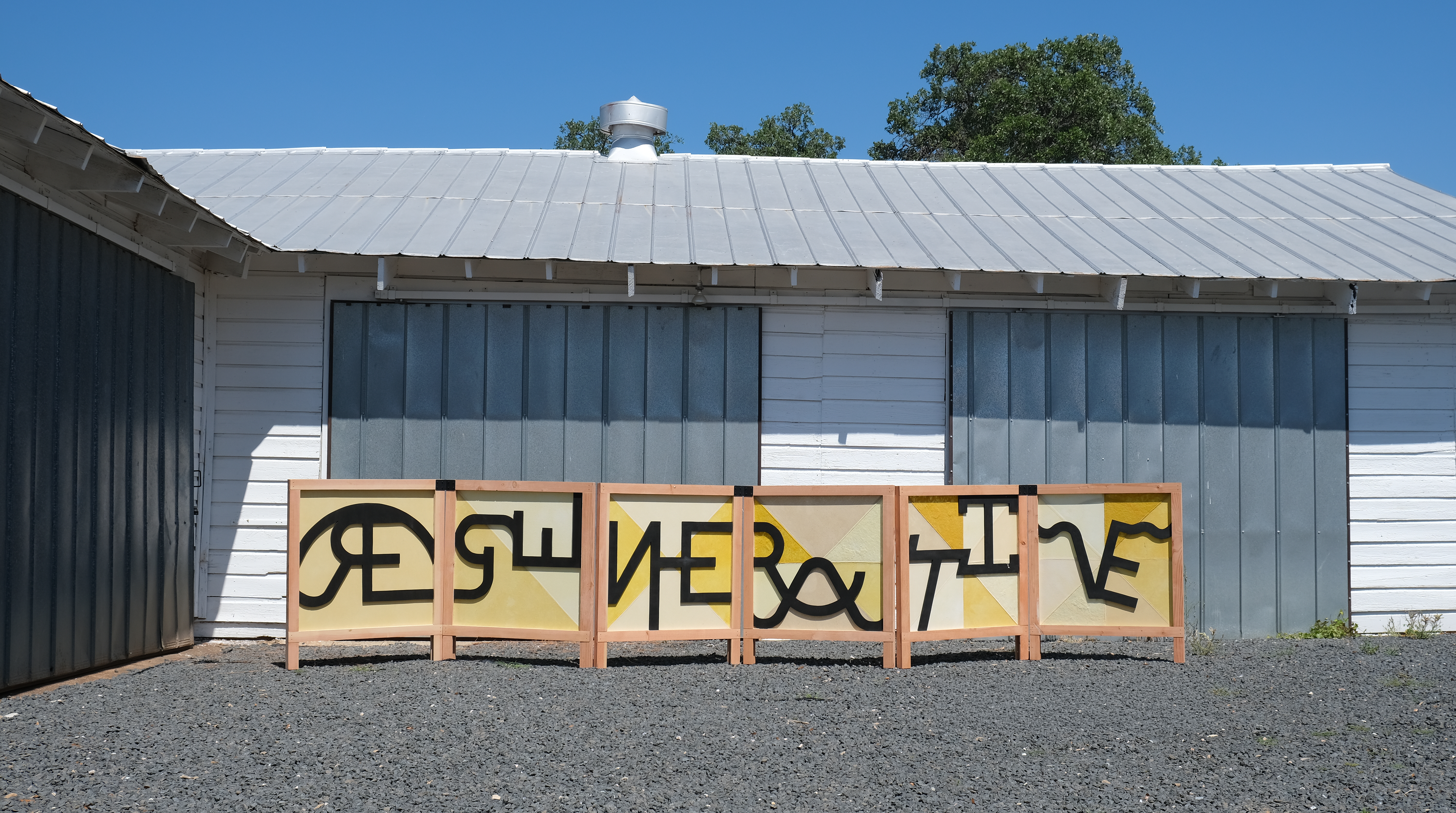
On the reverse side, the fence features abstracted diagrams of rotational grazing systems. These patterns reflect how regenerative approaches divide large pastures into smaller paddocks and move livestock through planned sequences to manage forage use and recovery. With the development of GPS-based virtual fencing, these divisions no longer require permanent posts and wire; boundaries can become increasingly precise and responsive to terrain, vegetation, and ecological goals.
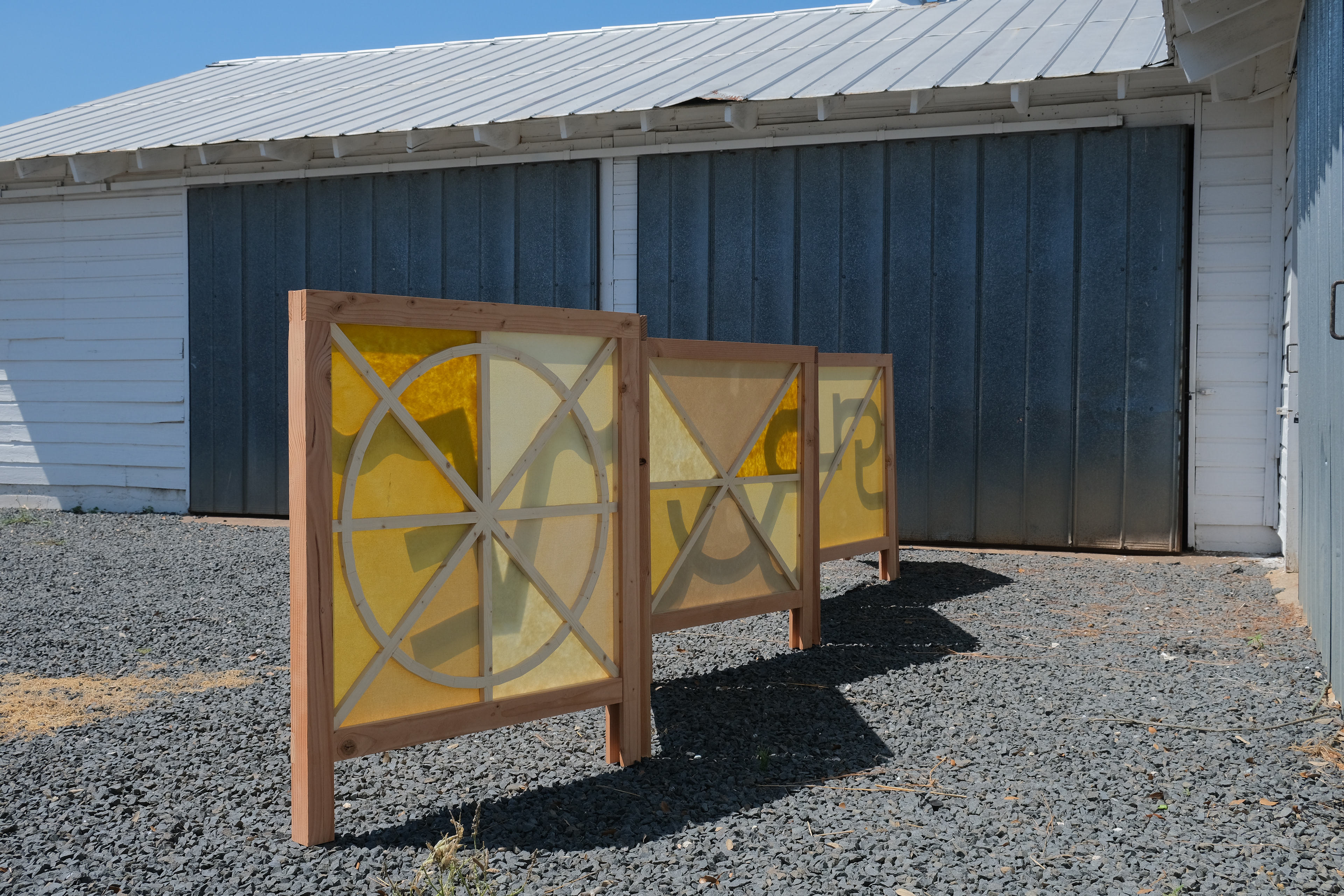
Regenerative Brands, such as Swinging RE, Lazy GE, and Flying VE.
FENCELINE TIMELINE
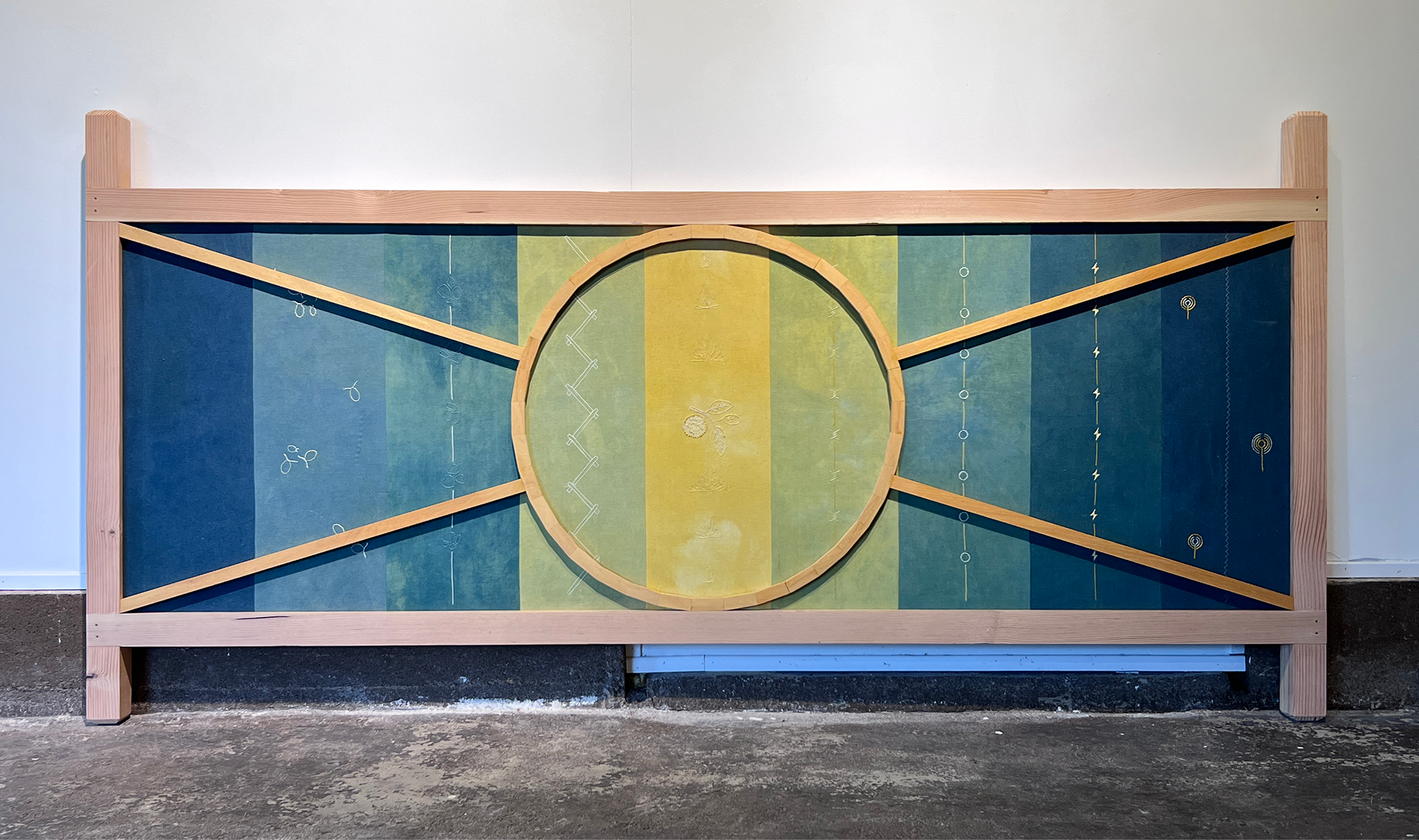
Fences serve as a primary instrument through which landscapes have been managed, structured, and fragmented over time. Fenceline Timeline explores this evolution through a single fence panel that frames a sequence of nine distinct fence types. The progression moves from open grazing systems with no manufactured boundaries, to living osage orange hedgerows, to the transformative introduction of barbed wire, and onward to contemporary virtual and GPS-based fencing that operates with minimal physical barriers. Each shift in fencing technology reflects a broader shift in how land, livestock, labor, and ownership are organized.
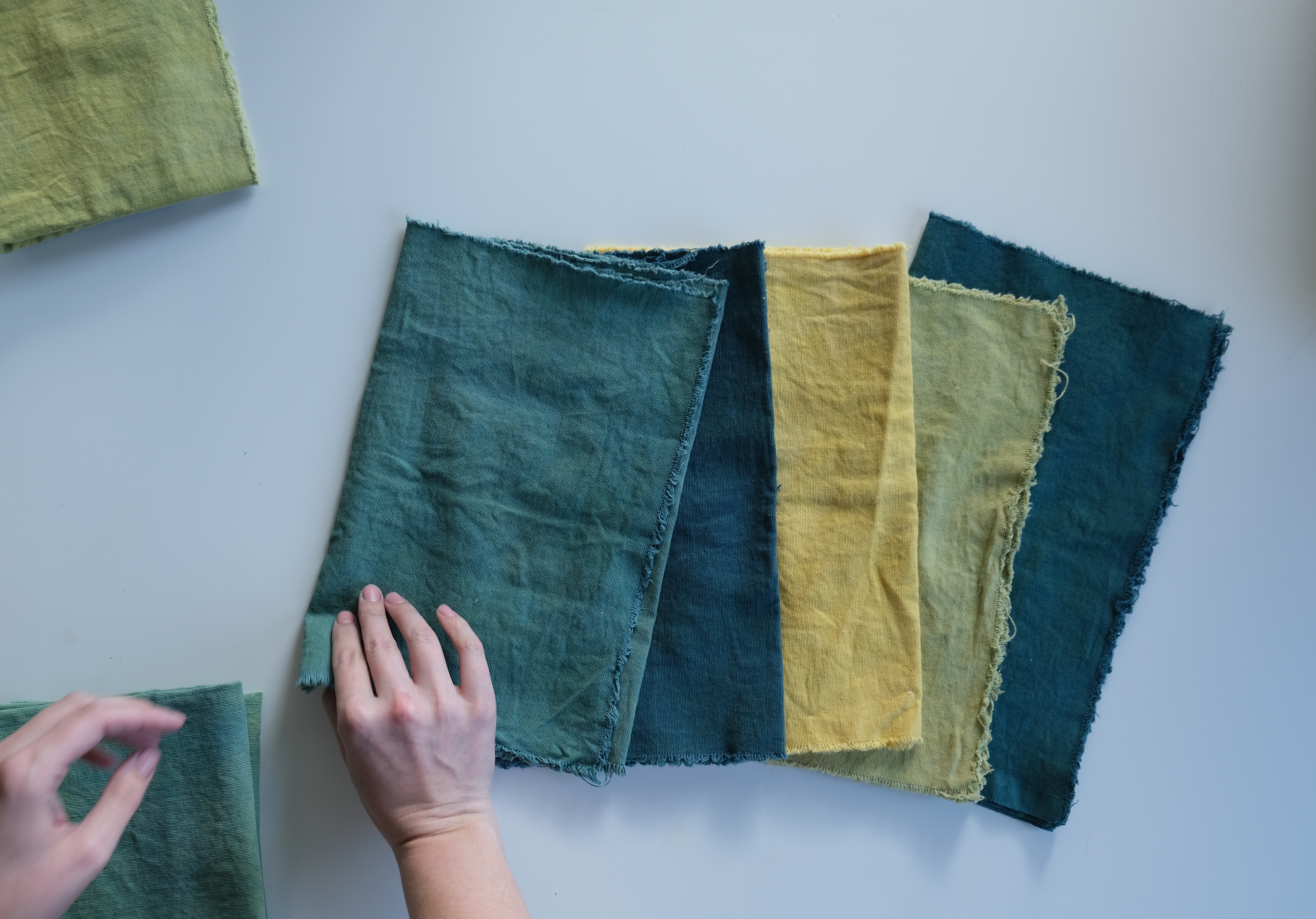
The fence inlays are made of osage orange, and each fabric panel is dyed with osage orange woodchips. By integrating this species into the panel, it highlights the popular pre- barbed wire fence that could produce a barrier that was “pig tight, horse high, and bull strong” (nps.gov).